The Genesis of Typographic Furniture
In the ever-evolving world of interior design, a fascinating trend has emerged that literally brings the written word into our living spaces: typography-inspired furniture. This innovative design movement transforms the fundamental building blocks of language—letters, words, and typographic elements—into functional, sculptural furniture pieces that blur the line between art, communication, and everyday utility.
The marriage of typography and furniture design isn’t entirely new, but it has gained significant momentum in recent years as designers seek to create pieces that are both functional and conceptually rich. This trend represents more than just aesthetic experimentation; it’s a thoughtful exploration of how we interact with language in our physical environment.
Typography-inspired furniture operates on multiple levels. At its most literal, it takes the actual shapes of letters and transforms them into chairs, tables, bookshelves, and other functional objects. At a more subtle level, it incorporates typographic principles—rhythm, spacing, hierarchy, and visual weight—into the structural and aesthetic elements of furniture design.
Form Following Letter: When Alphabet Becomes Architecture
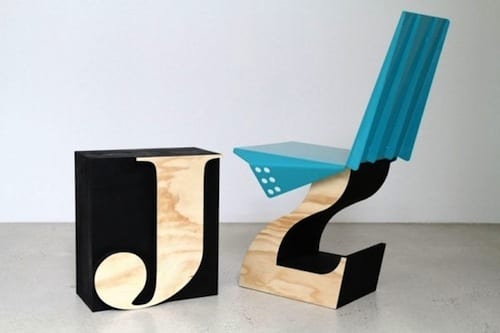
Perhaps the most striking examples of typographic furniture are pieces where individual letters become the entire structure of the furniture. Dutch designer Roeland Otten’s ambitious project of creating 26 letter-shaped children’s chairs exemplifies this approach. Each chair in his alphabet series corresponds to a letter, creating a learning environment where children literally sit on language while developing literacy skills.
The challenge in letter-shaped furniture lies in reconciling the aesthetic integrity of letterforms with ergonomic requirements. Not all letters lend themselves naturally to comfortable seating. While letters like “C,” “D,” and “O” offer natural curves that can accommodate the human form, angular letters like “A,” “K,” or “X” present design challenges that require creative interpretation.
The ORMA Chair, inspired by the lowercase “a” from the AH Forma typeface, demonstrates how this challenge can be met with elegant solutions. The designer has maintained the essential character of the letter while adapting its proportions and curves to create a comfortable, functional seating experience. The result is a piece that reads clearly as both letter and chair, satisfying dual purposes without compromising either.
Beyond Literal Letters: Typography as Design Philosophy
Not all typography-inspired furniture takes the literal approach of shaped letters. Many designers draw inspiration from typographic principles to inform their structural and aesthetic decisions. This might manifest as furniture with clean, sans-serif-inspired lines, pieces that play with the negative space concepts found in typography, or designs that incorporate the rhythmic spacing principles used in professional typesetting.
Script typography chairs, such as the Roundhill Furniture Botticelli series available on Amazon, take a different approach entirely. Rather than shaping the furniture like letters, these pieces use typography as surface decoration, covering upholstery with elegant script fonts that transform the furniture into a canvas for textual art. This approach allows for the incorporation of actual readable text—poetry, quotes, or decorative lettering—that can convey meaning beyond mere aesthetic appeal.
The Functional Poetry of Letter Storage
One of the most practical applications of typography-inspired design comes in the form of letter-shaped storage solutions. Bookshelf letters, increasingly popular for children’s rooms and creative spaces, serve the dual purpose of storage and decoration while reinforcing literacy in environmental design.
These pieces, available in various scales from small desktop organizers to room-sized installations, allow users to literally spell out words in their living spaces. A child’s name spelled out in bookshelf letters creates personalized storage while reinforcing letter recognition. Adult applications might include spelling inspirational words or creating typographic art installations that serve practical storage needs.
The Challenges of Typographic Furniture Design
Creating successful typography-inspired furniture requires balancing multiple competing demands. Designers must maintain the visual integrity and readability of letterforms while ensuring structural stability, comfort, and practical function. This often requires significant adaptation of letter shapes, which can sometimes compromise the clarity of the typographic reference.
Manufacturing considerations also play a significant role. Complex letter shapes may require specialized production techniques, custom tooling, or hand-crafting that can make these pieces expensive and limited in availability. This explains why fully realized letter-shaped furniture is often found in high-end design galleries rather than mainstream furniture retailers like Amazon.
Cultural and Educational Impact
Typography-inspired furniture carries cultural significance beyond its aesthetic appeal. In educational settings, letter-shaped furniture can serve as powerful learning tools, making abstract concepts of literacy tangible and interactive. Children who sit in letter-shaped chairs or organize books in letter-shaped shelves develop a physical relationship with the alphabet that can reinforce traditional learning methods.
For adults, typography-inspired furniture can serve as conversation starters, artistic statements, or expressions of professional identity. A graphic designer’s office furnished with letter-shaped pieces makes a clear statement about their relationship with their craft, while a literature professor’s home filled with script-covered furniture declares their passion for the written word.
The Digital Age Connection
Interestingly, the rise of typography-inspired furniture coincides with our increasingly digital world. As we spend more time interacting with text on screens, there seems to be a growing desire to bring the physicality back to our relationship with letters and words. Typography furniture offers a way to make the digital tangible, bringing the fonts we see on our computers into our physical environment.
This trend also reflects a broader movement toward personalization in interior design. Just as we customize our digital interfaces with chosen fonts and layouts, typography-inspired furniture allows us to extend this personal expression into our physical spaces.
Market Availability and Accessibility
While high-concept letter-shaped furniture pieces often remain in the realm of custom design and art galleries, more accessible versions are increasingly available through mainstream retailers. Amazon and other online platforms offer letter-shaped storage solutions, typography-printed upholstery, and smaller decorative pieces that allow consumers to experiment with this trend without major investment.
The democratization of typography-inspired design through mass-market availability has made it possible for more people to incorporate these concepts into their homes, from simple letter-shaped bookends to bold accent chairs featuring typographic prints.
Looking Forward: The Future of Text-Based Design
As typography-inspired furniture continues to evolve, we can expect to see more sophisticated integration of digital and physical elements. Smart furniture that can change its displayed text, pieces that respond to voice commands with typographic displays, or furniture that integrates with our digital reading habits represent potential future directions for this trend.
The fundamental appeal of typography-inspired furniture—the transformation of communication tools into functional objects—ensures its continued relevance in a world where the boundary between digital and physical experience continues to blur.
Conclusion
Typography-inspired furniture represents more than a design trend; it’s a thoughtful exploration of how we can live more intimately with language and communication. Whether taking the form of literal letter-shaped seating, script-covered upholstery, or storage solutions that spell out words, these pieces invite us to consider the visual and physical properties of the letters and words that surround us daily.
As our relationship with text continues to evolve in the digital age, typography-inspired furniture offers a way to maintain a tactile, physical connection with the written word. It transforms our living spaces into environments where language becomes not just something we read, but something we sit on, store things in, and live among—making our homes themselves into a form of readable text.
In embracing typography-inspired furniture, we’re not just furnishing our spaces; we’re making a statement about the central role that language and communication play in our lives, giving physical form to the words and letters that shape our thoughts and express our humanity.